Services · III
Every work has passed through doors; the task is to find out which.
Provenance research
Tracing a work’s provenance means reconstructing the sequence of hands, places and dates that links it back to the artist’s studio: dealers, galleries, collectors, exhibitions, sales.
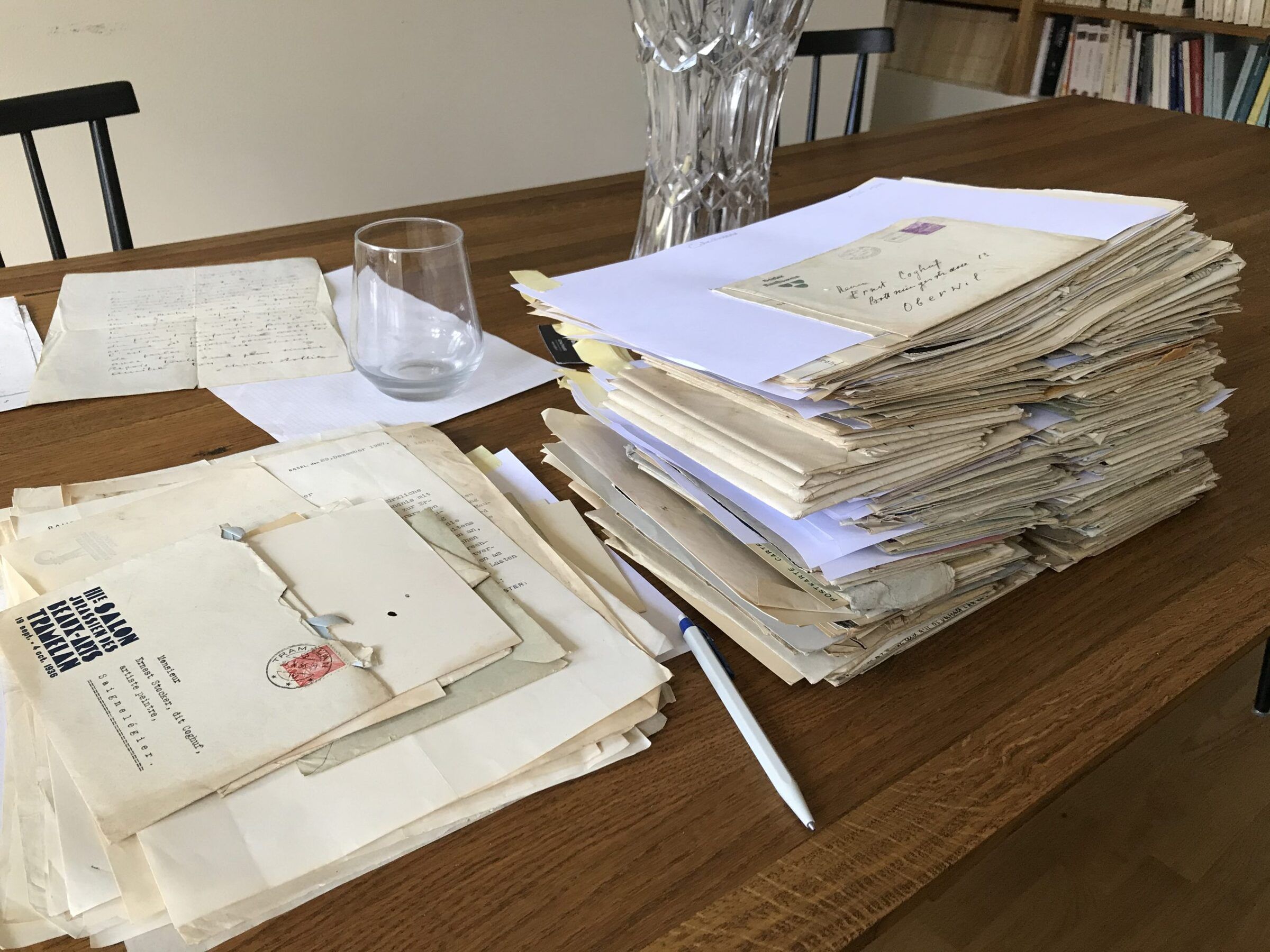
The art trade lies at the heart of my research. I hold a doctorate in art history from the University of Lausanne; my thesis was devoted to the collector and dealer Wilhelm Uhde (1874–1947), and several of my articles to his role in the reception of Cubism and naïve art.
This research taught me to read the traces left by the art trade – correspondence, catalogues, the writings of dealers and critics – between Paris and Berlin, from 1900 to 1950. Among other things, it led to an edition of Uhde’s letters and unpublished texts, co-edited with Manja Wilkens (Deutsches Forum für Kunstgeschichte Paris / arthistoricum.net, 2021).
The same method applies to the history of an entire collection, from its formation to its dispersal – as in the catalogue La collection Givel (2024).
Provenance is not merely a matter for historians: it sheds light on a work’s attribution, enriches its documentation and informs those who lend, acquire or pass it on.
Where a question goes beyond my field, I work with provenance researchers from my network. And I always point out the gaps: an honest provenance also shows where the thread is lost.
For whom
Collectors & heirs
To know the path travelled by a work you own.
- Recording and transcription of physical clues: labels, stamps, numbers, inscriptions on the reverse
- Research in exhibition and auction catalogues, the literature and archives
- Chronological reconstruction of successive owners and locations
- Documented provenance file, with sources cited and gaps identified
Museums & foundations
To document collection works, gifts or loans.
- Provenance research on individual works or groups of works
- History of a collection, from its formation to its dispersal
- Chronologies, biographies and catalogue entries
Researchers, publishers & rights holders
For projects built on archives.
- Sifting, transcription and editing of correspondence
- Research on dealers, galleries and collectors of the first half of the 20th century
- Reconstruction of an artist’s life from their archives
Approach
- 01
Gather
Everything you know or hold: invoices, letters, old photographs, family recollections – and the back of the work.
- 02
Question the sources
Exhibition and auction catalogues, literature, archives of dealers, galleries and collectors.
- 03
Trace the thread
Each step is dated, located and referenced; each hypothesis is flagged as such.
- 04
Report
A written report with chronology, sources and gaps, ready to be added to the work’s file.
Let’s talk about your collection
Contact